Spherical Lens

Product Classification

Tags

Spherical Lens

Spherical Lenses Manufacturer - Sunday Optics

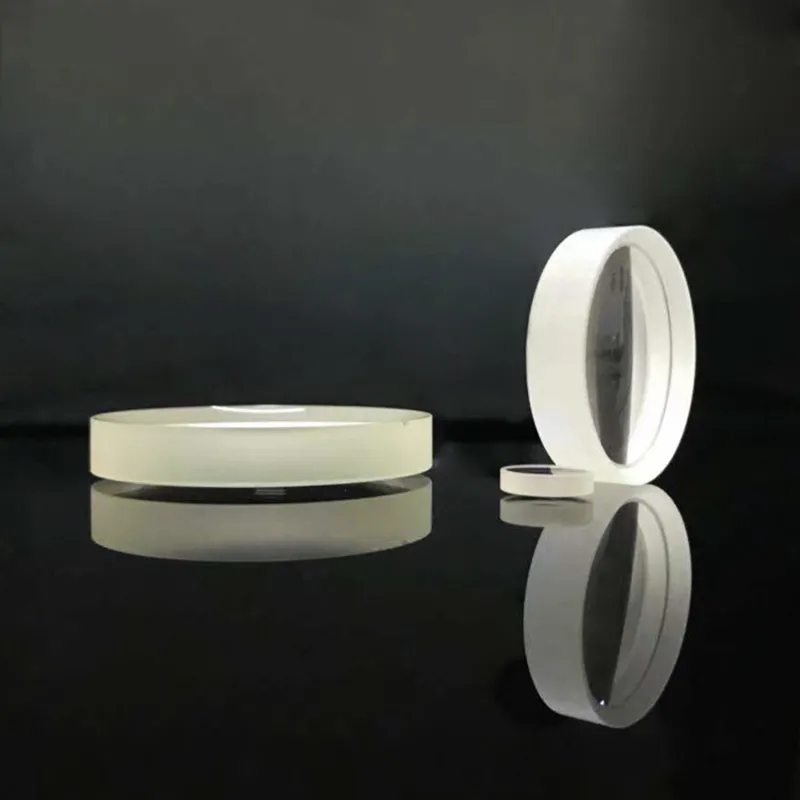
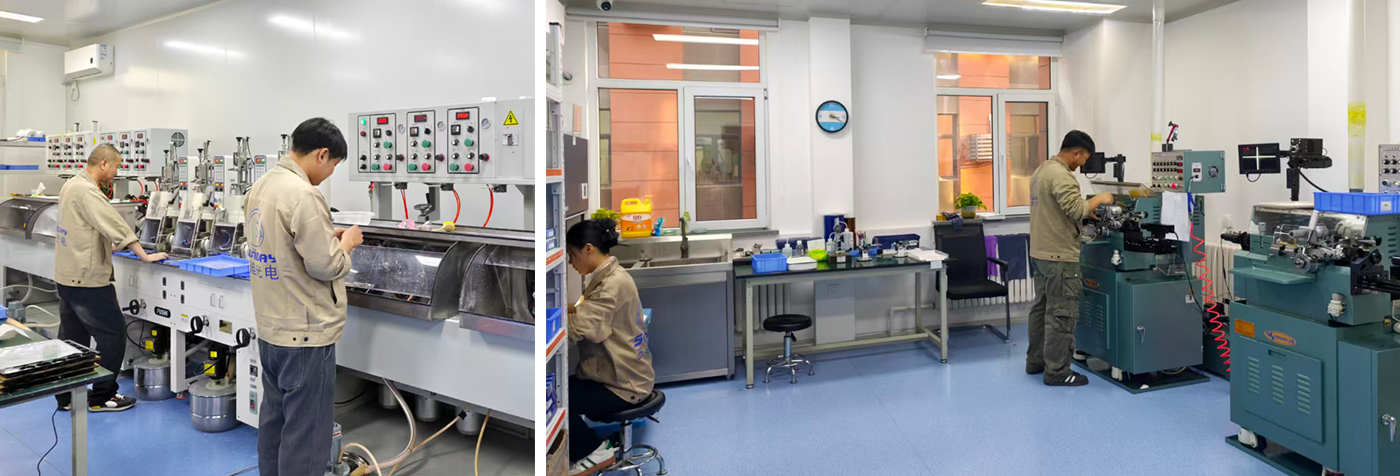
Changchun Sunday Optics Co., ltd manufactures Hundreds of thousands of Spherical lens every year for Thermal image, Measuring equipment, Telescope, Camera and so on. We can make customized . Contact us, we will offer you best plan.


Spherical lenses are optical lenses with one or more curved surfaces designed to converge or diverge light, alter its propagation path, and control wavefront curvature. They are fundamental optical components in a wide range of optical systems and are widely used in medical imaging, laser optics, security monitoring, the automotive industry, defense, aerospace, and other high-technology applications.


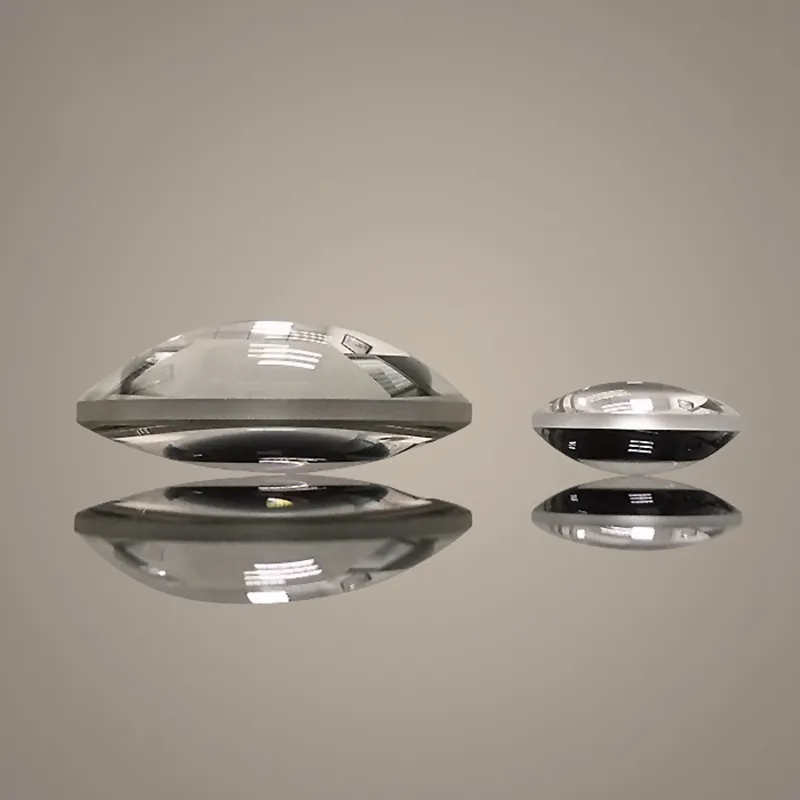
Sunday Optics offers a full range of customized spherical lenses, including plano-convex, plano-concave, bi-convex, bi-concave, meniscus, and achromatic lenses, manufactured to your exact specifications. We also provide tailored optical coatings to meet specific performance, durability, and environmental requirements.
Spherical Lens


What Specifications Can we achieve?

ItemSpecification
MaterialOptical Glass, UV Fused Silica, Sapphire, ZnSe, ZnS, Germanium, Silicon, CaF₂, MgF₂
Diameter RangeØ0.1 – 600 mm
Diameter Tolerance±0.01 mm
Surface Flatness1/20 λ
Surface Roughness< 0.3 nm
Coating OptionsAR, BBAR, Metal Reflective Coatings, Dielectric Films


What Materials Are Available for Spherical Lenses?

Sunday Optics manufactures spherical lenses using a wide range of high-quality optical materials to meet diverse application requirements. Our standard material options include optical glass such as K9, N-BK7, and N-SF11, as well as fused silica, fluoride crystals, and silicon.


If your application requires spherical lenses made from other optical materials, our engineering team can support custom material selection. Please contact us to discuss your specific requirements.


What Structure can we make?

Plano Convex Lens, Plano Concave Lens, Bi Convex Lens, Bi Concave Lens, Meniscus Lens, Achromatic Doublet lenses.Square Spherical lens, Hole Spherical lens.


What test report can we offer?

Zygo Interferometer.

Centeration

Size tolerance

Radius

Coating Curve with test plate


What is your delivery time?

10-100-200pcs: 15-25days

1000-3000pcs: 35 days

3000-5000pcs: 45 days

For large quantity, we can make partical delivery.

Learn More

Pack up

Introduction of Spherical Lenses

What Types of Spherical Lenses Are There? How Are Spherical Lenses Used?

Spherical lenses are classified by the curvature of their surfaces and are selected based on how they converge or diverge light within an optical system. Below are the most common types of spherical lenses and their typical applications.


1. Plano-Convex Lenses

A plano-convex lens has one flat surface and one outward-curving (convex) surface. It is primarily used to converge parallel light, correct diverging rays, or transform a point light source into a collimated beam.

When light enters from the convex side, the lens focuses it to a point. When a point light source enters from the flat side, the output becomes a parallel beam. The focal length of a plano-convex lens varies with wavelength, making material selection important.

Typical applications: transmitters, detectors, laser systems, and collimation optics.


2. Plano-Concave Lenses

A plano-concave lens has one flat surface and one inward-curving (concave) surface. It causes parallel incident light to diverge and forms a virtual image.

In optical systems, plano-concave lenses are often used to expand beams, increase effective focal length, project light, or compensate for aberrations introduced by other lenses.

Typical applications: laser beam expanders, telescopes, collimators, optical transceivers, magnifiers, and radiometers.


3. Bi-Convex Lenses

Bi-convex lenses have two outward-curving surfaces with similar radii of curvature, making them symmetrical. This symmetry helps reduce spherical aberration, coma, and distortion, especially at moderate conjugate ratios.

One surface is typically used to correct diverging light, while the other focuses parallel light into a small spot. Bi-convex lenses efficiently converge light and relay images between optical systems.

Typical applications: imaging relay systems and imaging applications with limited conjugate distances.


4. Bi-Concave Lenses

A bi-concave lens features two inward-curving surfaces with equal radii of curvature. It disperses collimated light and increases the divergence of incoming beams.

In optical systems, bi-concave lenses are used to expand beams, project light, and increase system focal length. They help minimize spherical aberration, coma, and distortion under unit conjugate conditions.

Typical applications: laser beam expanders, optical character recognition systems, viewing optics, and projection systems.


5. Meniscus Lenses

Meniscus lenses have one convex surface and one concave surface curved in the same direction. They are commonly used to correct aberrations, particularly spherical and chromatic aberrations, and to modify the focal length of existing optical systems.

Meniscus lenses are often combined with other lenses and are widely used in corrective optics, lighting system condensers, CO₂ lasers, and infrared optical systems. When the outer curvature is greater than the inner curvature, a meniscus lens can function as a magnifier.


6. Achromatic Lenses

Achromatic lenses are typically formed by cementing two lenses made from different optical materials—most commonly crown glass and flint glass. Both elements share the same focal length but differ in refractive index and dispersion. The positive, low-dispersion crown glass lens and the negative flint glass lens work together to cancel chromatic aberration.

Compared with single lenses, achromatic lenses significantly reduce both spherical and chromatic aberrations. When used at infinite conjugates, spherical aberration is minimized. Structurally, achromatic lenses simplify optical system design, reduce stray light and transmission loss, and deliver superior imaging quality.

Achromatic lenses may be cemented with optical adhesives or mechanically mounted without cement, depending on application requirements

Hot Products