Product Classification
Tags
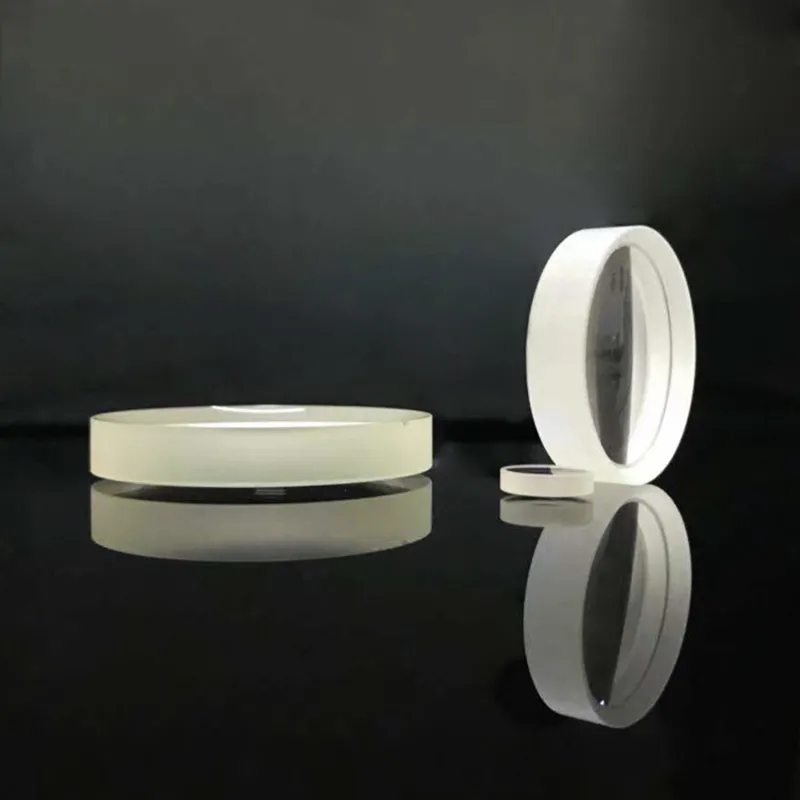
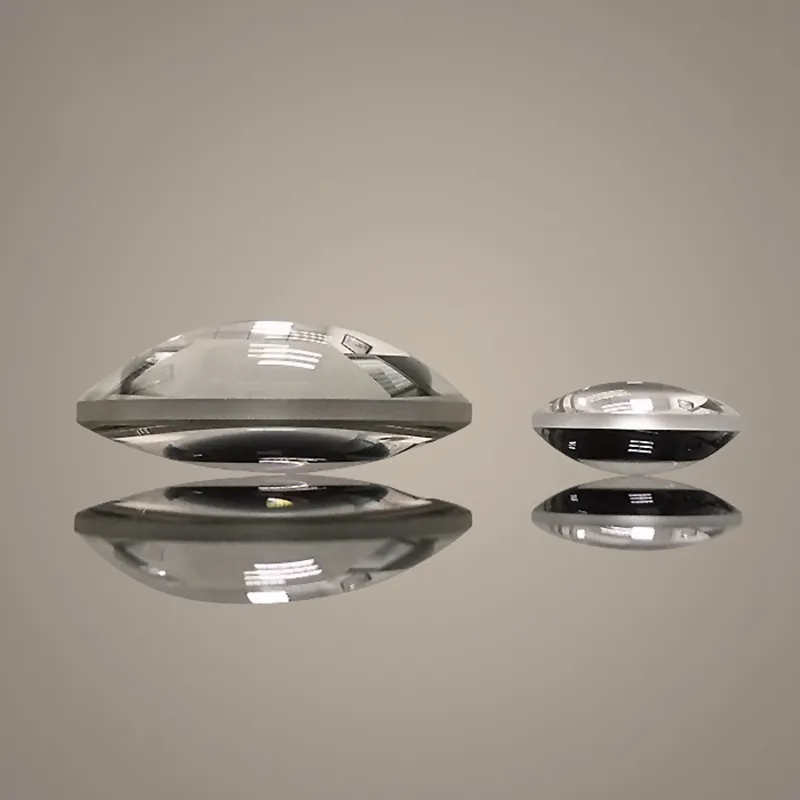
Cylindrical Lens
Cylindrical lens is mainly used to change the size of the imaging design requirements. For example, converting a spot to a line spot or changing the height of the image without changing the width of the image. Cylindrical lens be used in linear detector lighting, bar code scanning, holographic lighting, light information processing, computer, laser emission. The optical cylinder lens is widely used in the strong laser system and the synchrotron radiation beam line. At the same time, the requirements for cylinder lens parts are becoming higher, especially in the high-power laser resonator cavity piece and the long line interferometer, other high-precision test instruments and devices.
We are a trusted custom optical components supplier, providing precision cylindrical lenses, plano-convex, plano-concave, and achromatic optics tailored to your project requirements.
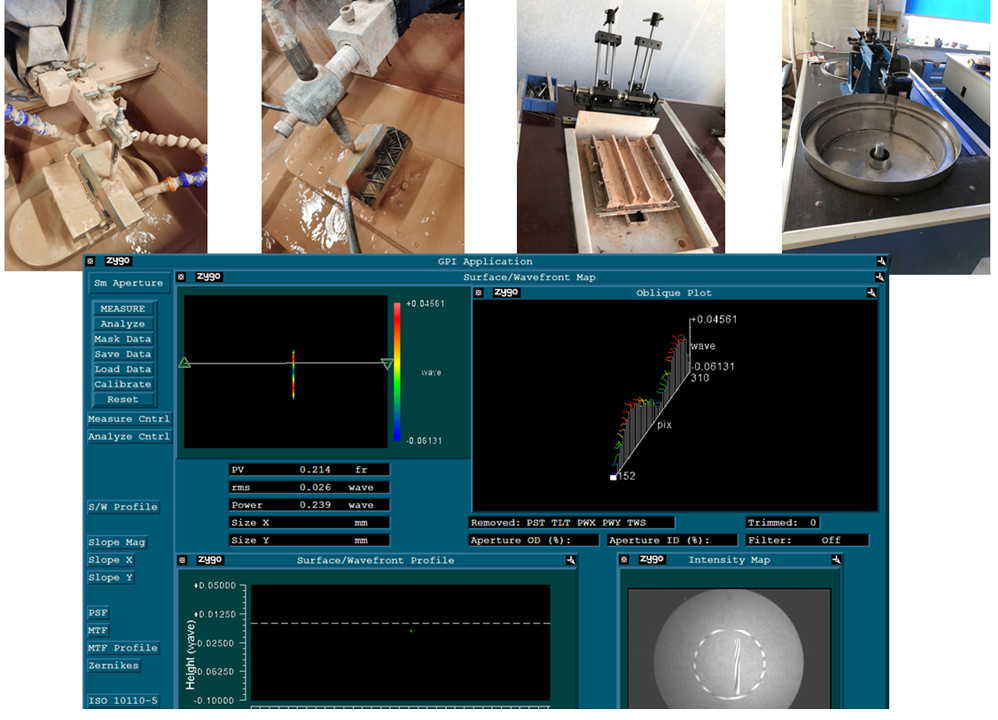
What Specifications can we achieve?
Material: Optical glass, UV Fused Silica, Infrared Glass, Silicon Germanium, CaF2.
Size: 0.5-600mm
Flatness: 1/10 [email protected]
Coating: AR BBAR.
What Structure can we make?
Plano Convex Cylindrical lens, plano concave lens, double convex cylindrical lens, double concave cylindrical lens, mensicus lens, achromatic cylindrical lens.
What test report can we offer?
Zygo Interferometer.
Centeration
Size tolerance
Radius
Coating Curve with test plate.
What is your delivery time?
10-100-200pcs: 15-20days
1000-3000pcs: 40days
For large quantity, we can make partical delivery.
Learn More
Pack up
Use a cylindrical lens whenever you need optical power in one axis but none in the perpendicular axis — e.g., converting a Gaussian spot into a line, reshaping a laser for material processing, or correcting astigmatism in an imaging train. Cylindrical optics are commonly offered as plano-convex (focusing in one axis), plano-concave (diverging in one axis) and achromatic cylinder pairs for broadband use.
· Focal length (f): determines line length and focus position. Shorter f → tighter line (higher power density) but increased sensitivity to alignment.
· Clear aperture / cylinder length: defines usable line length. Always specify unvignetted aperture for your beam or image height.
· Radius of curvature (ROC): used to calculate focal length for the lens material (n) at design wavelength.
· Material & wavelength: choose BK7 for visible, fused silica for UV/high-power UV, ZnSe or CaF₂ for IR. Thermal absorption and laser damage threshold vary by material — specify maximum pulse energy / average power.
· Surface figure & wavefront error: specify PV or RMS (e.g., λ/4 PV @ 632.8 nm) if your application is wavefront-sensitive.
· Coating: select AR optimized for your wavelength band to reduce reflection losses and ghosting.
· Start from the desired line width and working distance. Convert the desired line length and width to required focal length and beam diameter using Gaussian beam optics.
· Account for astigmatism sources. If your system already has astigmatism, pair a cylindrical lens with corrective optics (e.g., orthogonal cylindrical pair or anamorphic prisms).
· Thermal & power handling. For high average power lasers use fused silica or IR materials with appropriate coatings and specify bulk absorption limits.
· Mechanical mounting & centration. Cylinder lenses are orientation-sensitive; provide rotational mounting with ±0.1° or better if line orientation is critical. Use adjustable mounts to dial in angle and tilt.
If your application spans multiple wavelengths (e.g., broadband imaging or multi-wavelength sensors), use achromatic cylindrical pairs or custom compensated cylinders to reduce chromatic line-spread. For monochromatic laser line generation, single-element plano-convex cylinders are usually sufficient.
Hot Products