Sep. 10, 2026
Share:
A Spherical Lens bends light through one or two curved surfaces. A bi-convex lens, also called a double-convex lens, has two outward-facing surfaces and is often used to focus or collect light. Engineers may search for a custom bi-convex spherical lens supplier when a standard lens does not match their focal length, coating, or diameter needs. In this guide, we explain what a bi-convex lens is used for, how to select one, and when to work with a precision optical spherical lens manufacturer or an established optics brand such as Sunday Optics.
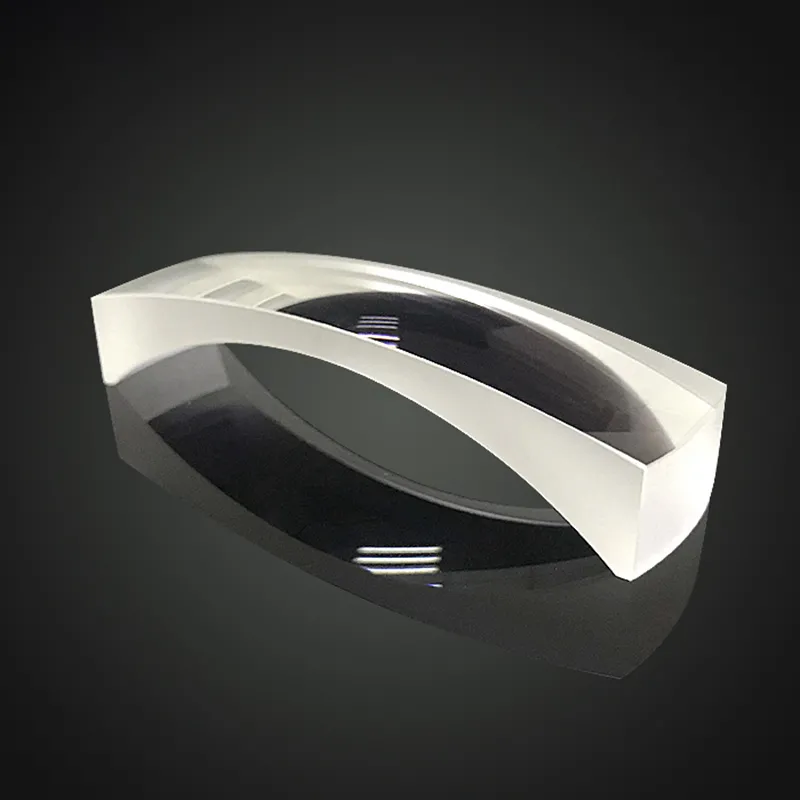
Figure 1. A bi-convex spherical lens can collect, focus, or redirect light in optical instruments.
A bi-convex lens is a transparent optical element with two convex surfaces. Both surfaces curve outward from the center. Because the lens is thicker at the center than at the edge, it normally causes parallel light rays to move toward a common focal point.
The lens is also called a:
The word “spherical” describes the shape of the lens surfaces. A spherical surface follows part of a sphere. However, not every bi-convex lens is spherical. Some precision lenses use aspherical surfaces to reduce optical errors.
| Term | Meaning |
|---|---|
| Focal length | The distance from the lens principal plane to the focal point |
| Optical power | The focusing strength of a lens, measured in diopters or (1/f) in meters |
| Clear aperture | The usable area through which light passes |
| Radius of curvature | The radius of the imaginary sphere used to describe a curved surface |
| Center thickness | The thickness measured through the optical axis |
| Edge thickness | The thickness at the outer edge of the lens |
| AR coating | An anti-reflection coating that lowers surface reflection |
| Spherical aberration | A focusing error caused when rays near the edge and center do not meet at exactly the same point |
A bi-convex lens is a positive lens because its optical power is normally greater than zero.
A bi-convex lens is used when a system needs to collect light, focus an image, or form a real image. Its symmetrical shape makes it useful when the object and image are at similar distances from the lens.
Common applications include:
A bi-convex lens can focus a collimated laser beam into a smaller spot. The final spot size depends on several factors:
For a nearly ideal Gaussian beam, a shorter focal length generally creates a smaller focus, but it also increases alignment sensitivity. A coating designed for the laser wavelength can reduce reflection losses.
For example, a lens intended for a 632.8 nm helium-neon laser should not automatically be treated as ideal for a 1,064 nm infrared laser. The refractive index and coating performance change with wavelength.
LEDs emit light over a wide angle. A bi-convex lens can collect part of this light and redirect it into a narrower beam. This is useful in:
A bi-convex lens for collimating LED light must be selected according to the LED’s emitting area and angular distribution. A lens that is too small may waste light. A lens that is too short may create strong beam divergence and make the system difficult to align.
A positive lens can form a real, inverted image when the object is placed farther from the lens than its focal length. The basic thin-lens equation is:
[ \frac{1}{f}=\frac{1}{u}+\frac{1}{v} ]
Where:
Magnification can be estimated with:
[ m=-\frac{v}{u} ]
For example, if a lens has a 50 mm focal length and the object is 100 mm away:
[ \frac{1}{50}=\frac{1}{100}+\frac{1}{v} ]
The calculated image distance is 100 mm. The magnification is approximately -1, meaning the image is inverted and about the same size as the object.
Optical sensors often need more light at the detector surface. A bi-convex lens can focus light onto a photodiode or image sensor. The lens should match:
Poor alignment can cause the focused spot to miss the active area. In production equipment, a lens barrel or adjustable mount may be needed.
Bi-convex lenses are used in simple microscopes, relay systems, condenser assemblies, and experimental optical benches. High-resolution microscope objectives are more complex than a single bi-convex lens, but a positive lens can still perform basic light collection and focusing tasks.
In laboratory setups, the lens is often mounted on an optical rail so that the distance between the source, lens, and detector can be adjusted.
When light enters glass from air, it changes direction because the two materials have different refractive indices. The curved surface changes the direction of each ray by a different amount.
A ray near the optical axis bends only slightly. A ray farther from the axis meets the curved surface at a larger angle and bends more strongly. After passing through both surfaces, the rays may meet at a focal point.
The approximate lensmaker’s equation is:
[ \frac{1}{f}=(n-1)\left(\frac{1}{R_1}-\frac{1}{R_2}+\frac{(n-1)d}{nR_1R_2}\right) ]
Where:
For a thin lens, the thickness term is often neglected:
[ \frac{1}{f}\approx(n-1)\left(\frac{1}{R_1}-\frac{1}{R_2}\right) ]
This shows why the same lens shape can have different focal lengths when made from different glass types.
For example, N-BK7 has a refractive index close to 1.5168 at the standard Fraunhofer d-line of 587.6 nm. Fused silica has a lower refractive index in the visible range, so its curvature must be designed differently to produce the same focal length.
A bi-convex lens is often a good choice when:
A symmetrical bi-convex lens can help balance some forms of aberration when used near a 1:1 conjugate ratio.
However, it may not be the best design for every system. Consider another lens type when the application has special requirements:
| Requirement | Lens type to consider |
|---|---|
| Object and image distances are very different | Plano-convex or meniscus lens |
| Low spherical aberration across a wide aperture | Aspherical lens |
| High image quality over a wide field | Achromatic doublet |
| Strong divergence correction | Negative lens |
| Very short focal length | High-index or aspherical lens |
| High-power laser use | Fused silica or specialized laser glass |
Both lenses have positive optical power, but their shapes suit different conditions.
For a collimated beam focused to a point, a plano-convex lens is usually positioned with its curved side toward the incoming collimated beam. The correct orientation depends on the optical layout and the required performance.
Choosing a lens is not only about diameter and focal length. A reliable optical spherical lens manufacturer should help you confirm the complete specification.
State the operating wavelength or wavelength band:
Glass transmission and coating performance depend on wavelength. A lens that works well at 532 nm may not offer the same transmission at 1,550 nm.
A focal length tolerance of ±1% may be acceptable for a basic light collector but unsuitable for a precision imaging system. Ask the manufacturer whether focal length is measured at a specific wavelength and temperature.
Common materials include:
Material choice affects:
Surface quality is often written as a scratch-dig value, such as 40-20. This grading system describes visible scratches and digs under a defined inspection method.
Surface accuracy is commonly described in fractions of a wavelength, such as λ/4 or λ/10. A lower error value generally indicates a more accurate optical surface, although the right level depends on the application.
An anti-reflection coating can reduce reflection at each air-glass surface. Uncoated glass may reflect approximately 4% per surface near normal incidence, depending on refractive index and wavelength. A coating can reduce this loss across a selected wavelength band.
Request coating information such as:
The clear aperture should be larger than the usable beam or image area. If the beam nearly fills the lens diameter, edge effects and clipping may reduce performance.
A practical design usually leaves mechanical margin around the active beam. The exact margin depends on beam movement, housing tolerance, and alignment accuracy.
Important mechanical details include:
A lens can meet its focal length specification but still cause image movement if the optical axis is not centered correctly.
Before placing a production order, ask for inspection documents. Depending on the project, these may include:
For safety-critical or high-volume products, request a first article inspection. This confirms that the first production sample matches the approved drawing and specification.
Sunday Optics can be considered when you need optical components, custom lens support, and communication about material, coating, and dimensional requirements. Always provide a technical drawing or complete specification before requesting a formal quotation.
Possible causes include:
Solution: Check the beam diameter, wavelength, lens orientation, and distance from the lens to the target. For a high-quality laser focus, consider an aspherical lens or an achromatic design.
This may be caused by:
Solution: Reduce the aperture, use a longer focal length, or replace the single element with an achromatic or aspherical lens.
Possible causes include:
Solution: Select a coating matched to the operating wavelength and use a material with suitable transmission data.
Common causes include:
Solution: Use a compliant lens seat, controlled torque, proper edge chamfers, and clean optical gloves. Avoid touching the clear aperture.
This often happens because production equipment introduces:
Solution: Test the complete optical assembly, not only the lens. Include temperature, vibration, cleaning, and alignment checks before mass production.
Do not rub a dry lens if dust may contain hard particles. Dry rubbing can create fine scratches.
No. A bi-convex lens describes the two-surface shape. A spherical lens describes the curvature of its surface. A bi-convex lens can have spherical surfaces, but it may also be manufactured with non-spherical or aspherical surfaces.
It can reduce divergence and produce a more directional beam, but the result depends on the LED size, emission angle, lens focal length, and distance from the LED. A small LED source is easier to collimate than a large extended source.
For a symmetrical bi-convex lens, either side may work in a near-symmetric setup. In real systems, the best orientation depends on object distance, image distance, beam convergence, and aberration control. Test both orientations if the design is sensitive.
Yes, if the material, coating, aperture, surface quality, and laser damage threshold match the laser. A standard uncoated glass lens should not be used in a high-power laser system without reviewing its damage and absorption data.
Use the thin-lens equation:
[ \frac{1}{f}=\frac{1}{u}+\frac{1}{v} ]
Make sure all distances use the same unit. The equation is an approximation, so thick-lens effects and principal-plane locations may matter in precision systems.
Provide:
This information helps Sunday Optics recommend a suitable standard or custom solution instead of quoting a lens that may not meet the optical performance target.
Usually not at the same level as a multi-element imaging lens. A single lens may show spherical aberration, chromatic aberration, coma, and field curvature. For demanding imaging, consider an achromatic doublet, triplet, or aspherical system.
A bi-convex lens is mainly used to focus light, collect light, form images, and couple optical energy into sensors or detectors. It is a practical choice when the object and image distances are similar and the system does not require the correction level of a multi-element lens.
Before ordering, confirm the wavelength, focal length, material, coating, clear aperture, surface quality, and centering tolerance. For custom dimensions or tighter optical performance, discuss the design with an optical spherical lens manufacturer such as Sunday Optics. If you are comparing a custom bi-convex spherical lens supplier, begin with a drawing, operating wavelength, and target performance so the manufacturer can recommend the correct lens.
Hot Products


