An optical Spherical Lens manufacturer can help you select a focusing optic that matches your laser wavelength, power, beam quality, working distance, and cutting or welding process. This guide explains how to choose the lens step by step, which tools and specifications you need, and which purchasing mistakes can cause poor focus, thermal damage, or inconsistent processing. Sunday Optics supplies precision optical components for high-power laser applications, including fused silica focusing lenses and custom optical solutions.
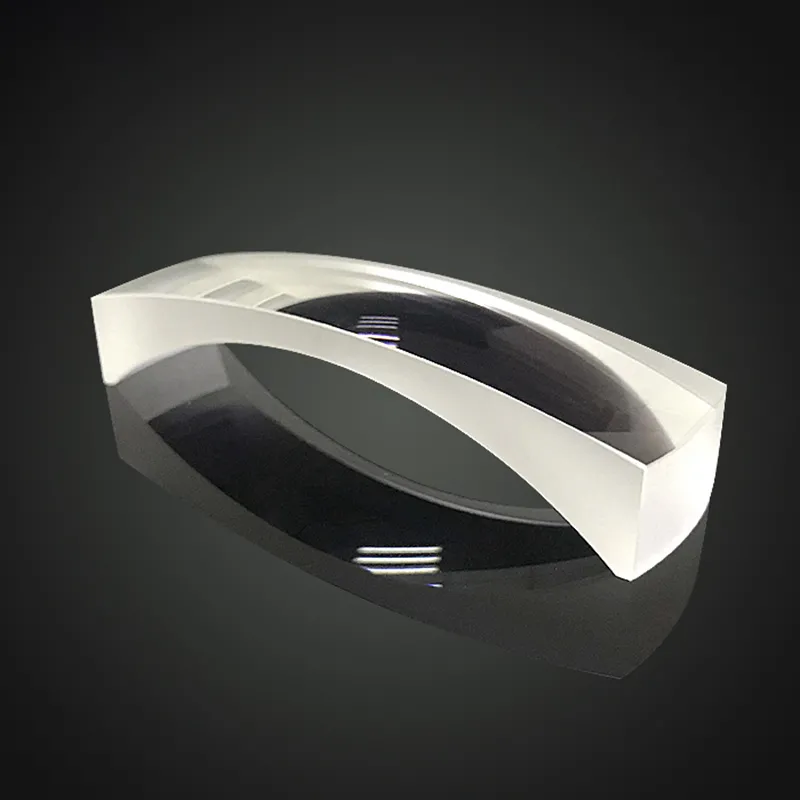
Start with the laser and process requirements
Identify the laser wavelength first
The focusing lens must transmit the laser wavelength efficiently. High-power fiber lasers commonly operate near 1030 nm, 1064 nm, or 1070 nm. The lens substrate and coating must be designed for the actual operating wavelength and its allowable bandwidth.
- Fiber laser near 1030 nm: Select a coating optimized for the 1030 nm range.
- Fiber laser near 1064 nm: Select a coating optimized for the 1064 nm range.
- Fiber laser near 1070 nm: Confirm that the coating has suitable transmission at 1070 nm.
- Multi-wavelength system: Choose a broadband coating only when the lens manufacturer confirms adequate transmission and damage resistance across the full range.
Do not select a lens only because it is labeled as a laser lens. A lens coated for visible light may have excessive absorption at an infrared fiber laser wavelength. Even a small amount of absorption can create thermal lensing, coating damage, or a cracked optic at high power.
Define the material and processing application
The required focal spot and depth of focus depend on what the laser must do. Cutting, welding, drilling, cladding, cleaning, and marking each require different optical priorities.
- Thin sheet cutting usually requires a small spot and accurate focal positioning.
- Thick plate cutting may require a longer focal length and a larger depth of focus.
- Laser welding often requires stable focus, moderate spot size, and good tolerance to process contamination.
- Laser drilling may require a small spot, high numerical aperture, and precise control of the focal plane.
- Laser cleaning may require a larger spot, a longer working distance, or a scanning lens rather than a simple fixed focusing lens.
- Laser cladding may require a larger and more uniform spot to cover the powder or wire deposition zone.
Record the operating conditions
Before comparing products, write down the complete operating specification. This prevents a lens from being selected based on power alone.
- Laser wavelength in nm.
- Maximum continuous-wave power in W or kW.
- Maximum pulse energy in J.
- Pulse duration and repetition rate for pulsed systems.
- Beam diameter at the lens in mm.
- Beam quality, normally expressed as M2.
- Input beam type, such as collimated, divergent, or galvo-scanned.
- Required spot diameter at focus.
- Required working distance from the final lens surface to the workpiece.
- Required depth of focus.
- Whether the system uses air cooling, water cooling, or a cooled lens mount.
- Expected dust, smoke, spatter, humidity, and vibration levels.
Calculate the focal length and spot size
Estimate the required focal length
The focal length determines the relationship between spot size, working distance, and depth of focus. A short focal length generally produces a smaller spot when the input beam diameter remains constant, but it also produces a shorter working distance and a more sensitive focus position.
For a near-Gaussian beam, the approximate focused waist can be estimated with:
w0 = 4 M2 lambda f divided by pi D
In this expression:
- w0 is the focused beam radius.
- M2 is the beam quality factor.
- lambda is the laser wavelength.
- f is the focal length.
- D is the beam diameter at the focusing lens.
The approximate spot diameter is 2w0. This equation is useful for preliminary selection, but it does not replace a complete optical design. Real results are affected by aberration, truncation, lens shape, beam ellipticity, thermal effects, alignment error, and the actual beam profile from the fiber delivery head.
Match focal length to the required spot
Use the following selection logic:
- Measure or obtain the beam diameter at the focusing lens.
- Confirm the beam quality factor M2 from the laser or beam delivery supplier.
- Enter the wavelength, beam diameter, and target spot size into the preliminary spot-size calculation.
- Compare several focal lengths instead of choosing the shortest available lens.
- Check whether the resulting working distance is suitable for the nozzle, protective window, gas flow, and workpiece geometry.
- Confirm the result with the focusing head supplier or optical manufacturer.
Consider numerical aperture and depth of focus
Numerical aperture affects both focusing strength and alignment sensitivity. A higher numerical aperture can produce a smaller spot, but it usually creates a shorter depth of focus and greater sensitivity to lens contamination and workpiece height variation.
For a low-angle approximation:
NA is approximately D divided by 2f
A smaller spot is not always the best choice. If the workpiece is uneven or the cutting head cannot maintain accurate height control, a slightly larger spot with a longer depth of focus may produce more stable results.
When selecting the lens, compare:
- Target spot diameter.
- Rayleigh range or practical depth of focus.
- Required working distance.
- Height variation of the workpiece.
- Accuracy of the automatic focus system.
- Expected thermal drift during continuous operation.
Choose the right lens material and optical design
Select fused silica for demanding fiber laser systems
Fused silica is commonly preferred for high-power fiber laser focusing optics because it has low absorption at near-infrared wavelengths, good thermal performance, high transmission, and a relatively low coefficient of thermal expansion.
When comparing fused silica lenses, verify the following:
- Substrate grade and homogeneity.
- Absorption at the operating wavelength.
- Surface quality and surface irregularity.
- Clear aperture.
- Coating damage threshold.
- Coating transmission and reflection values.
- Maximum operating temperature.
- Compatibility with the lens mount and cleaning process.
Compare plano-convex and other lens shapes
A plano-convex lens can be suitable for a simple collimated-beam focusing arrangement when it is installed in the correct orientation. In many systems, the curved surface should face the incoming collimated beam to reduce spherical aberration.
Other designs may be more suitable when performance requirements are higher:
- Aspheric lens: Useful for reducing spherical aberration in compact systems, but it may require tighter manufacturing and alignment control.
- Achromatic or multi-element lens: Useful when multiple wavelengths or broad spectral bandwidth must be handled.
- Meniscus lens: Useful for reducing aberration in selected optical layouts.
- F-theta scan lens: Required for many galvanometer scanning systems because it produces a more uniform relationship between scan angle and position.
- Custom multi-element focusing assembly: Useful for high-power systems that require a large clear aperture, low aberration, long working distance, or special thermal management.
Do not replace a scan lens with a standard spherical focusing lens. The optical design must match the beam delivery architecture.
Check coating performance at high power
High-power laser coatings must withstand the actual continuous-wave intensity, pulse energy, and thermal load. Damage threshold values may vary according to test method, pulse duration, beam diameter, repetition rate, and environmental conditions.
Ask the supplier for:
- Coating wavelength range.
- Average transmission.
- Residual reflection.
- Laser-induced damage threshold test conditions.
- Maximum continuous-wave power recommendation.
- Maximum pulse energy and pulse duration recommendation.
- Coating durability and cleaning compatibility.
A damage threshold reported for a short laboratory pulse should not automatically be used as the safe power rating for a continuous-wave industrial laser.
Check the mechanical and thermal design
Confirm clear aperture and edge clearance
The clear aperture must be large enough for the entire laser beam, including beam expansion, alignment error, and thermal movement. If the beam is clipped by the lens edge or mount, the system may produce diffraction, hot spots, unstable cutting, and local coating damage.
Check these dimensions before ordering:
- Outside diameter.
- Center thickness.
- Edge thickness.
- Clear aperture.
- Focal length tolerance.
- Center thickness tolerance.
- Wedge tolerance.
- Chamfer size.
- Lens seat diameter.
- Thread, retaining ring, or cartridge dimensions.
Evaluate thermal lensing
Thermal lensing occurs when absorbed laser energy creates a temperature gradient in the optic. The gradient changes the refractive index and physical shape of the lens, which shifts the focus or changes the spot size.
Thermal problems are more likely when:
- The coating absorption is too high.
- The beam is centered poorly.
- The beam is clipped by the aperture.
- The lens surface is contaminated.
- The lens mount applies uneven mechanical stress.
- The lens is used above its recommended power range.
- The lens is installed in a system without sufficient heat removal.
For kilowatt-class systems, ask whether the focusing head requires a water-cooled mount, a cooled lens barrel, a temperature sensor, or a replaceable protective window ahead of the focusing lens.
Separate the focusing lens from the protective window
The protective window is designed to shield the focusing lens from smoke, spatter, dust, and process debris. It is usually a consumable component and should not be treated as the primary focusing optic.
A good optical head normally provides:
- A sealed or purged optical path.
- A replaceable protective window.
- Clean and dry assist gas where appropriate.
- A lens mount that avoids stress and contamination.
- A method for checking the protective window without removing the focusing lens.
Replacing a damaged protective window quickly is usually less expensive than allowing contamination to reach the focusing lens.
Follow a step-by-step lens selection process
First step: Gather the laser data
- Record the wavelength, maximum power, pulse characteristics, and beam quality.
- Obtain the beam diameter at the intended lens position.
- Confirm whether the beam is circular, elliptical, astigmatic, or multimode.
- Identify whether the system is fixed-focus, coaxial, off-axis, or galvanometer-scanned.
- Record the available space inside the focusing head.
Second step: Define the processing target
- Specify the material and thickness.
- Define the target spot diameter or kerf requirement.
- Define the required working distance.
- Estimate the allowed focus shift during operation.
- Determine whether a small spot or a longer depth of focus is more important.
Third step: Calculate candidate focal lengths
- Use the beam diameter and estimated M2 to calculate an initial focal length range.
- Calculate the expected spot diameter for each candidate focal length.
- Calculate the approximate numerical aperture.
- Compare the expected depth of focus with the workpiece height tolerance.
- Reject options that require an impractical working distance or excessive alignment accuracy.
Fourth step: Select the lens material and coating
- Select a substrate with low absorption at the operating wavelength.
- Choose a coating designed for the actual wavelength and power mode.
- Request damage threshold data measured under conditions similar to the application.
- Confirm that the coating can tolerate the intended cleaning chemicals and procedures.
- Choose a lens with sufficient clear aperture and optical quality.
Fifth step: Verify mechanical compatibility
- Compare the lens diameter and thickness with the lens mount.
- Check the retaining ring and seating method.
- Confirm the lens orientation and installation direction.
- Verify that the mount does not touch the optical clear aperture.
- Check that thermal expansion will not create excessive stress.
- Confirm that the protective window and focusing lens can be replaced independently.
Sixth step: Confirm the design with the supplier
- Send the supplier the complete laser and process specification.
- Request an optical drawing and tolerance sheet.
- Ask for transmission, coating, damage threshold, and power-handling information.
- Request the expected spot size and working distance for your beam conditions.
- Ask whether the lens has been tested in a comparable continuous-wave or pulsed system.
- Confirm availability, inspection records, packaging, replacement lead time, and warranty terms.
Seventh step: Install and validate the lens
- Clean the lens mount and surrounding optical head before installation.
- Use powder-free gloves and suitable optical cleaning materials.
- Install the lens in the specified orientation without touching the coated surfaces.
- Align the beam at low power or with a safe alignment source.
- Verify that the beam passes through the clear aperture without clipping.
- Start at reduced power and inspect the spot on a suitable test target.
- Measure the focus position and compare it with the design value.
- Increase power gradually while monitoring spot stability, reflected light, and temperature.
- Run a process test on the intended material and record the results.
- Inspect the protective window and focusing lens after the first high-power test.
Prepare the required tools and documents
Use the correct measurement tools
The following tools help verify that the selected focusing lens will work in the actual laser system:
- Laser wavelength specification or calibrated wavelength meter.
- Beam profiler for beam diameter, ellipticity, and beam quality evaluation.
- Power meter rated for the laser wavelength and power level.
- Energy meter for pulsed laser systems.
- Beam expander or beam sampler when direct measurement is not practical.
- Shear plate or alignment tool for collimation checks.
- Focus target or beam waist measurement system.
- Optical power attenuation and beam dump equipment.
- Calipers and micrometer for mechanical measurements.
- Temperature sensor or thermal camera for thermal stability checks.
- Cleanroom wipes, approved lens tissue, reagent-grade solvent, and air blower.
- Protective eyewear rated for the exact laser wavelength.
- Interlocks, barriers, warning signs, and a controlled laser work area.
Collect the required supplier documents
- Optical drawing.
- Material certificate.
- Coating specification.
- Transmission curve.
- Surface quality and flatness data.
- Focal length and centration tolerances.
- Laser damage threshold information.
- Power-handling recommendation.
- Cleaning and storage instructions.
- Inspection and quality-control report.
Do not perform direct high-power beam measurements without suitable attenuation, beam containment, interlocks, and trained personnel. A lens selection project must include laser safety controls as well as optical calculations.
Avoid common purchasing and installation mistakes
Do not choose by focal length alone
Two lenses with the same focal length may perform differently because of differences in substrate absorption, coating quality, surface accuracy, clear aperture, centration, and thermal behavior. Always evaluate the complete specification.
Do not ignore the real beam diameter
Spot-size calculations are unreliable when the beam diameter at the lens is unknown. A focusing lens designed for a 10 mm beam will not produce the same result when the actual beam diameter is 6 mm or 14 mm.
Do not select a visible-light coating for an infrared laser
The coating must match the fiber laser wavelength. Incorrect coatings can create unnecessary reflection, heating, ghost beams, and early damage.
Do not use an ordinary low-power lens in a kilowatt system
Low-power optics may have unsuitable coatings, excessive absorption, weak edge finishes, or insufficient thermal performance. Confirm the lens rating for the actual continuous-wave or pulsed operating conditions.
Do not overlook beam clipping
Beam clipping at the lens edge or mount creates diffraction and localized hot spots. The clear aperture should provide practical margin for alignment error and beam expansion.
Do not install the lens in the wrong direction
Plano-convex and other asymmetric lenses have a preferred orientation. Follow the supplier drawing. Reversing the lens may increase spherical aberration and reduce the quality of the focused spot.
Do not tighten the retaining ring excessively
Excessive mechanical pressure can deform the lens, create stress birefringence, shift the focus, or cause cracking during thermal cycling. The lens should be held securely without being clamped unevenly.
Do not touch or clean the lens incorrectly
Fingerprints, dust, and unsuitable solvents can increase absorption and permanently damage the coating. Use the supplier's cleaning procedure and replace the protective window when contamination or damage is visible.
Do not compare suppliers only by unit price
A lower-priced lens may have a shorter service life, less consistent focal length, weaker coating performance, or incomplete inspection data. Compare total operating cost, replacement frequency, delivery reliability, and technical support.
Compare suppliers before placing the order
Ask technical questions before purchasing
- Is the lens designed for my exact wavelength?
- What is the recommended maximum continuous-wave power?
- What are the pulsed damage threshold conditions?
- What beam diameter and M2 were used for the spot-size estimate?
- What is the actual working distance from the final lens surface?
- What is the usable clear aperture?
- What is the focal length tolerance?
- Is a protective window required?
- Is active cooling necessary for my power level?
- What is the recommended lens orientation?
- How should the lens be cleaned and stored?
- Can the supplier provide a custom diameter, coating, focal length, or mount?
Use a practical comparison checklist
| Evaluation item |
What to compare |
| Optical compatibility |
Wavelength, focal length, clear aperture, centration, and aberration |
| Power handling |
Absorption, coating damage threshold, continuous-wave rating, and pulse rating |
| Mechanical fit |
Diameter, thickness, edge shape, mount dimensions, and retaining method |
| Thermal performance |
Thermal lensing data, cooling requirements, and temperature stability |
| Quality control |
Inspection reports, surface quality, coating uniformity, and focal length tolerance |
| Service support |
Technical consultation, customization, replacement availability, and delivery time |
Make the final selection with a complete specification
Use this final purchasing specification
Before issuing a purchase order, confirm every item below in writing:
- Laser type: fiber laser.
- Operating wavelength: exact nm range.
- Laser mode: continuous-wave, quasi-continuous-wave, or pulsed.
- Maximum power or pulse energy.
- Beam diameter at the lens.
- Beam quality or M2 value.
- Target spot size.
- Focal length.
- Working distance.
- Clear aperture.
- Lens material.
- Anti-reflection coating specification.
- Surface quality and surface accuracy.
- Centering and wedge tolerance.
- Outside diameter and thickness.
- Lens orientation.
- Cooling and mounting requirements.
- Protective window requirements.
- Cleaning, inspection, packaging, and replacement procedures.
Choose performance stability over the smallest theoretical spot
The best focusing lens is the one that maintains a stable and usable focus throughout the actual production cycle. A lens with a slightly larger theoretical spot may deliver better results if it provides longer depth of focus, lower thermal drift, stronger contamination tolerance, and easier alignment.
For a reliable decision, combine optical calculations, supplier data, mechanical verification, low-power alignment, and controlled high-power testing. This approach reduces failed trials and helps ensure that the focusing lens matches the complete laser processing system rather than only one specification.
As an experienced optical spherical lens manufacturer, Sunday Optics can support wavelength-specific coatings, fused silica focusing optics, custom focal lengths, mechanical dimensions, and high-power laser applications. Visit Sunday Optics to discuss a focusing lens specification for your fiber laser system.


